


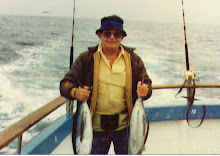
Yesterday I drove to McCook, NE, which is about 65 to 70 miles east of here and is about 50 miles from the Colorado border. It was an easy drive on good two lane roads with 60 and 65 mph speed limits. I passed through seven or eight small towns and never had to come to a full stop. Highway signs give fair warning that there will be reduced speed ahead, so there is ample time to slow down to the usual 35mph through the towns. The town sizes varied from 136 to 1044, and McCook itself is just over 7,000. Wow, it even has traffic lights. That's a big city in our book.
It has become obvious to me that a car's license plate can be a real liability on that kind of a drive if a person likes to drive over the speed limit. My license number is 51-C887, and the 51 indicates that I live in Harlan County. The law will usually give some leeway to drivers from their county, but those from outside that county had best toe the line to as near driving perfection as possible. Every county has a different number based on how many cars are registered there, and of course Omaha cars, from Douglas County, have license plates that begin 1-. You definitely do not want to push your luck in other counties if your license plate begins 1-. It may prove costly.
I noticed as I got nearer to McCook that the "rolls" in the rolling countryside began to have deeper valleys and higher peaks. I can only assume that the terrain was beginning its change to the higher plains of Colorado. I want to come back in the later spring when things are green and see it again. It's pretty even in the early spring drab brown, but later it ought to be very, very pretty.
Driving these country roads is an eerie feeling for an ex-Californian, because there is almost no traffic. It's really weird after spending my life in L.A. The danger that all drivers must prepare for on those drives is deer. I have been told by almost everyone that at some time, somewhere in Nebraska, a deer will jump in front of me and the front of my car will bring it to an untimely death. If I am lucky, they say, the damage to my car will be less than $5,000.00. I am not looking forward to that eventuality.
I have a sister who has lived in Missouri for 40 years and she tells me I can buy a small device that attaches to my bumper and emits a high pitch whistle that only deer can hear. It frightens them as the car approaches and they will not jump in front of the car in panic. She says she has had one on her car for many years and has never even had a close call with a deer. She did tell me, however, that the whistle didn't help very much the night she hit the cow. That's another story, though.
Monday, March 17, 2008


A Lot Going On, Part 3
Every region of this country has its peculiarities in the naming of places and Nebraska is no different. Example: Norfolk, NE, is pronounced as though it were spelled Norfork, which makes this the second state I've been in where a town of that name is not pronounced as it is spelled. While in the army, six centuries ago, I was stationed near Norfolk, VA. It was made clear to me early on that pronouncing it as it was spelled marked me as an alien creature. The citizens of that state pronounce it "Nawflk", no exceptions allowed.
I regularly visit a local "village" here named Orleans. Please articulate it as "Orleens". However, if you are in Louisiana, be advised that the battered city on the delta is not pronounced "New Orleens". It is "N'awlins" to the true natives, a few of whom I have met along the years. To the ears of the westerner, the southern pronunciation of ordinary sounding words can take some strange turns. The same is true of some towns here in Nebraska.
Nebraska has the town of Beatrice, and it is pronounced "be-at-ris", with the accent on "at". It's almost directly south of Lincoln, so someday I'm sure I will be there for a visit.
A couple of familiar names to my friends in Southern California would be the towns of Arcadia, NE. and Fullerton, NE, which are pronounced exactly as they are back in the far west. I also notice that just across the Nebraska border in Colorado are the towns of Akron and Yuma.
There are many towns in Nebraska that reflect its direct involvement in the opening of the west and its Native American homelands. Place names like Red Cloud, Broken Bow, Tekemah, Medicine Creek, Red Arrow County, Omaha and Ogallala all give testimony to the Indian past of Nebraska. And, of course, Red Cloud was the home of Willa Cather, who wrote so many classic stories about life in pioneer Nebraska. I recommend everyone rent the movie "O' Pioneers" with Jessica Lange, which is a faithful re-telling of Cather's greatest novel.
Even the name "Nebraska" comes from an Otoe Indian word for "flat", but it's misleading because Kansas sets new standards for the definition of flat. Pool tables dream about being that flat. Nebraska farmland is primarily gently rolling countryside, but the sandhills in north-central Nebraska and the canyons of the badlands in the east belie the belief that Nebraska is absolutely flat.
Currently, I am reading a book by Roger Welsch, who is to Nebraska what Garrison Keillor is to Wisconsin and Minnesota with his tales of Lake Woebegon. For years, Welsch appeared on the "CBS Sunday Morning" show with his "Postcard From Nebraska". His love for this state is up front to the point that he describes his disgust when he lived briefly in Colorado and found that the scenery was obscured by all the trees and mountains. He loves these plains and I can see why.
Friday, March 7, 2008
This Is For The Birds

Yesterday was Thursday, March 6, and I drove my daughter, Eva Marie, to Grand Island, NE, (just over 100 miles away, population 50,000) for an appointment with an epilepsy specialist. Much of that drive on I-80 runs parallel to the Platte River and we were treated to views of endless flocks of migratory birds as they traveled to and from the river.
The Platte River is not typical of what most of us see in our mind's eye when we hear the word "river". It meanders gently across the landscape from its origins in Colorado to its merger with the Missouri River. It is broad and shallow with literally hundreds of small islets dotting its course. Those islets, which a westerner would refer to as sandbars, provide the reason for the Sandhill Crane to rest and "refuel" in Nebraska.
The vast numbers of the Sandhill Cranes that visit here are of the subspecies referred to as the "Lesser Sandhill Crane", lesser denoting that this is a fairly small crane and weighs 7 to 9 pounds at most. Yesterday we saw literally thousands of them in different flocks moving to and from the river. It took a conscious effort on my part to keep my eyes on the road while driving instead of trying to watch the show up in the air. Just to keep things interesting, there were also large flocks of geese and ducks moving from the feeding areas to water sanctuaries. For the Cranes, the Platte offers nighttime protection from coyotes, foxes, bobcats, badgers, black bears and the occasional cougar. Bald eagles have been known to go after some of the smaller cranes, and we have plenty of those eagles in the area (Fish and Game officials counted 63 bald eagles at Harlan County Lake this winter).
Many of the farmers in the area are less than thrilled to see their fields covered with cranes during the daylight hours. Cranes, of course, love to eat grains and if some of those grains are newly planted seeds, so much the better. The winter wheat, of which I wrote in an earlier posting, is starting to sprout and cranes love the green leaves. If it were just a few cranes, the farmers wouldn't be concerned at all, but a total migratory population of 600,000 seed eating waterfowl can do a lot of damage. There is not much the farmers can do, since Nebraska is the only state in the U.S. that does not allow the hunting or taking of cranes. Most of the birds will stay on the Platte for about a month, leaving in early April for Northern Canada, Alaska and Northeastern Siberia, where they will nest and lay their eggs.
 This is a Whooping Crane, of the rarest and most endangered birds in the world, and if luck is with me I will see one or two of these magnificent creatures when I visit the Rowe Sanctuary on my crane watching day.
In 1941 there were only 21 Whooping Cranes alive in the wild. Today, that number is close to 600, but its continued existence is still very much in doubt. It is much larger than the Sandhill Crane, standing 5 feet tall and weighing 18 to 22 pounds on the average. I have read about the efforts to save this bird since I was 12 years old, and if I am sufficiently blessed to see one living in the wild as nature intended, I will consider that one of the highlights of my 73 years.
Tuesday, March 4, 2008
Brrrrr!
 This is a picture of the northern lights, or aurora borealis, as seen from Sondrestromfjord, Greenland. It's important to me because I spent a year of my army life there from spring of 1955 to spring 1956. When people here continually ask me how I am handling the cold weather in Nebraska, I usually tell them a few tales of what really cold weather is like. Thanks to the nature of this blog, I can show you in just a few pictures what that place was like.
First, they no longer call it by the Danish name Sondrestromfjord. It is now officially named Kangerlussuaq, its original Inuit name. Further, to my astonishment, it is now a tourism stopover, and an Air Greenland flight leaves Baltimore, MD, destined for Kangerlussuaq once each week during the summer.
Since the early 1950s, there has always been a fairly nice hotel there. Sondrestrom was a refueling point for the very first over -the-pole flights from Los Angeles to Europe, and the hotel was maintained for the passengers in case the planes could not take off due to weather or mechanical difficulty. When I was there, the two airlines involved were TWA, flying Lockheed Constellations, and SAS , piloting Douglas DC-6Bs. Both were the last generations of propeller driven passenger aircraft. The USAF has closed its airbase and now the entire "town" and airfield is under the care and maintenance of the Danish government.
 With today's long range jet aircraft, stopping to refuel is no longer necessary, but SAS still flies there from Copenhagen, Denmark, two to three times a week. The picture to the left was taken in the 1970s and shows a Douglas DC-8 being prepped for flight. The steam in the air tells us the temperature was probably between thirty and forty degrees below zero.

During the winter, morale was a problem for those of us who stayed the entire year. The officers in charge tried their best to keep us grinning, but signs like the one to our right failed to get the job done.
Many times in winter, when we had been outside in extremely cold weather, we were required to drink a glass of cold water before we could have a cup of coffee. The water helped warm our teeth in stages so that we could have a hot drink without cracking the enamel and requiring extensive dental work.
 A creature of the north doesn't seem too impressed with the SAS jumbo jet parked on the ramp. In Greenland and Scandinavia they are called reindeer. In Canada and Alaska the same animal is called a caribou.
 Even the little critters will take a curious look at what the strange two legged animals are up to.

This is what the old airbase looked like. That's the control tower in the center and the runway is just in front of it. The string of boxlike buildings at the bottom of the photo are cement barracks for quartering the military residents. Before we left Ft. Eustis, VA, to travel to Sondrestrom, we were told that when we arrived we would be able to find a woman behind every tree. As you can see, there are no trees in Greenland. None. Not even one.
Was it cold? You betcha it got cold. We army types didn't stay on the base itself as shown above. We were stationed in wooden barracks seven miles over the hills. We were located at a little facility called Camp Lloyd right at the harbor. There were twenty of us (more or less) who stayed the entire year. In the summer when the harbor thawed we imported 300 army stevedores from the States to unload ships filled with goods for the airbase. Army trucks and army drivers then hauled the goods over the hills and to the base.
Our showers and restrooms (officially called latrines) were about fifty yards from the barracks, which were not well insulated. In the winter if you wished to really chill a six pack of beer, you placed it on the floor overnight. It would be ice cold for the next day.
One night after having showered, shaved, et al, I dressed up in my bulky but warm air force flight suit and trudged back to the barracks (Walking was not difficult as there was not much snow. It was usually too cold to snow). As I stood at the barracks door preparing to enter, the thermometer on the outside wall said that the temperature was 44 degrees below zero. I reflected that I had not seen the sun in weeks, thanks to perpetual darkness, and I swore that when I got back to the USA I would never, ever complain about hot weather again. I still keep that promise today.
Monday, March 3, 2008
I apologize to my friends who check this blog to see what's going on with the L.A. transplant. January was so busy for me that it remains a blur of activity. How does that happen in such a small town and in the dead of winter? February introduced me to something I have never experienced before: Bronchial Pneumonia. I never want to be introduced to that again. It knocked me flat, and every time I coughed, it felt like red hot metal ball bearings were rolling around in my chest. Ugh. Ugh. There are a couple of bugs ravaging this area that were not covered in any of the usual flu and pneumonia immunizations that many of us received at the start of winter. My oldest daughter, Eva Marie, went down with the flu in February even though she had a flu shot in November. Almost everybody I talk to tells me that at least two members of their family were down with it.
Sickness aside, winter is on its way out but it ain't leaving without a fight. Generally everything is warmer and the snow is all gone. Saturday, March first, the temperature in Alma, Nebraska, was 74 degrees. Wow, that felt good. Sunday the high temperature was 44 with wind and rain. Today it is dry, but there is wind and cold air. This morning the time and temperature sign on the bank told me that at 9:00 AM it was 24 degrees downtown. Those who have lived East of California know that March is a month for battle between the departing and incoming seasons, but generally the trend is toward warmer weather.
I just want it to be warm enough long enough to melt all the ice on the banks of Harlan County Lake and the Republican River so I can cast my line into the waters. My freezer is empty of fish and that just isn't the way things are supposed to be.
The walking trail by the lake is snow and ice free and I walked it three times last week. Boy, my legs are out of shape. The scenery on the walk is rather stark, since none of the trees have new leaves yet. I looked closely at the ends of the some of the lower branches of a couple of trees and you can see the new growth that will soon be putting out the Spring greenery.
In the mornings now, I hear birds singing when I open my eyes and try to find the courage to get out of bed. I have always read that when Red Breasted Robins show up, you know that winter is gone. Well, the Robins are everywhere but it's still pretty cold out there today and for the rest of the week. The weekend, though, looks to be much warmer.
In the middle of the month, I am going to a nature preserve on the Platte River to watch the Sandhill Cranes. Those cranes are on their way north to Canada, Alaska and Siberia, but every spring they stop on the Platte for about a month to eat and gain strength for the rest of the journey. Approximately 600,000 of them, plus a few of the rare and endangered Whooping Cranes, will spend their nights in the safety of the sandbars of the Platte, then take off in the morning to feed in the many fields in the area. They return at dusk to the Platte for their evening snooze. The Rowe Sanctuary has built viewing blinds where we can stand unseen and peer through the cutouts to watch these magnificent birds and take pictures. No flash photography is permitted as it tends to frighten the cranes. Since the viewing will take place while the sky is still rather gray and the sun is just coming up, we'll have to use a very fast film, so I'm going to get some ASA800 film on my next foray into Kearney. We are told that by the time sun is up and the sky is bright, most of the cranes will have flown off to their feeding grounds.
One of the townspeople who knows told me to mark my calendar on the date that is three weeks before Easter. That, he says, is when the fish that spawn move out of the lake and into the river. Walleye, largemouth bass, white bass and a few stripers will be there for the taking. That date is next Saturday, March 9. I'm armed and ready.
Tuesday, January 1, 2008
Local Warming
Sorry to have been gone so long, but it has been a busy holiday season. I hope everyone who reads this had a Merry Christmas, Happy Hannukah, Happy New Year or happy tenth anniversary of the day she ran off with the mailman.
Alma, Nebraska, enjoyed a white Christmas for the first time in four or five years, but it's all beginning to melt away. I am told that some winters here there is no snow at all, but we had enough to make it look like a Christmas scene from a Currier and Ives painting. Further, late on Christmas Day we were visited by what the weather people called a "freezing fog". I had never heard of that before, but what it did to the trees was magnificent.


 The "fog" left little feathery ice crystals on the branches of all the trees. It looked like a fantasy creation by a Hollywood studio special effects team. It was not the heavy caked kind of ice that can cause so many problems, this ice crumbled and fell away at the slightest touch. It was almost like a dream sequence from a movie.

 These are shots of the snow covered lawn area near my parking spot. What's interesting about it to me are those little footprints in the snow. They belong to a very busy squirrel who apparently doesn't believe in hibernation. I see him at various times of the day racing back and forth from his nest, which is hidden somewhere within the tree. Those tracks of his fan out to form a semicircular pattern from the tree's base as he searches for food. I thought that at this time of the year he would be curled in a furry little ball within his hideaway sleeping out the cold weather. Apparently he has other plans.
It is getting warmer during the day and the snow is starting to melt. The white stuff has already disappeared from most of the roadways and sidewalks and is now melting from the lawns.

 By the end of this week, according to the forecasters, most of the snow will be a memory. Friday the temp will be between 45 and 50 degrees, which means it's time to wash the car. Now those in California will
probably say, "That's not warm!"
Well, once a person adjusts to this climate, 45 or 50 presents opportunities not available when it is a few degrees cooler. My poor car looks like it's been through a mud war and deserves better treatment. The do it yourself car wash in town will probably be very busy this weekend.
I was startled one day to see someone using the car wash when the temperature was below freezing and was told that some people do that regulary to wash the road salt off the under portions of the car. Sure, some of the water freezes to the car surfaces, but if the salt is gone, that's OK.
People here continually ask me how, as a Los Angeles transplant, I am dealing with the cold. I patiently explain to them that I am not having a problem. I visited Nebraska at Christmas time on several occasions. I flew out for my oldest daughter's birthday in January, and I flew out when my youngest graduated from the U. of Nebraska in Lincoln (normally referred to as UNL) in December when the wind chill was -38 degrees. I am no stranger to cold weather. I have cold weather clothing and may have been the only guy in L.A. who owned two sets of thermal long-johns. And, of course, when I was in the army I spent a year in Greenland, near the North Pole. Maybe I'll talk more about that next time. I have discovered that some interesting things are going on up there.
Wednesday, December 12, 2007
Baby, It's Cold Outside.
Autumn has given up all attempts to hold off winter. Officially, it's still nine days until winter is in residence, but it has been regularly cold and snowy for ten days, now. The ice storm that is currently in the news, was a little to the east of us. We got a bit of sleety rain that turned into a thin coating of ice, but nothing as severe as an ice storm that hit Alma last new year's eve. Parts of the town were without power for a week, and Holdrege, twenty-four miles north of us was powerless for weeks and weeks. That ice storm hit this area so bad that 3,000 telephone poles broke off and fell over. Power workers from three or four nearby states came to the rescue. Several eighteen wheelers came to Holdrege with flat bed trailers holding enormous generators to supply electricity to the freezing town.
 This is my satellite dish, and while it is showing the result of icing, it certainly isn't severe. And contrary to claims of some "competing" forms of tv service, I have never lost my signal due to clouds, rain, lightning, snow, ice or the heartbreak of psoriasis.
You see these dishes on almost every home in the area, since the alternative ain't much. The local cable company's top of the line, most expensive package consists of only 47 channels and does not include ESPN2. That is tantamount to heresy. How is a man supposed to be whole without ESPN2?
 Since I have no covered parking, my poor car must feel like I'm storing it in a food freezer. This morning I had to fill a plastic juice container with warm tap water and pour it in the cracks around the car door to get it open. It was frozen solid and wouldn't budge. My California friends who came from the midwest and the east can probably recall those glorious moments. I have a special "bra" that covers the windshield at night so that it doesn't ice up and force me to scrape, scrape, scrape. I have found that making products to help deal with the problems of automobile icing is a big business out here. I have also found out that most of those products don't work very well. Warm tap water worked great, but the special aerosol spray I bought to "guarantee" that the doors would not freeze shut was a piece of crud. Ah, well.
 There will always be something magical to me about white snow covering a neighborhood scene. I took this picture while standing in my front door at noon today. The high temp is going to be 22 degrees F, and the low tonight will be approximately 6-8 degrees F. I won't notice most of it at all since I will be comfortably housed on my couch this afternoon reading a book and sipping a cup of hot chocolate topped with those little marshmallows. Now, that's how cold weather should be experienced.
 Looking down the street in the other direction produces the same sort of scene. The snow is about six to eight inches deep on the lawns and walkways, but has certainly been flattened on the street by passing cars. I am gaining a certain amount of expertise in navigating in the snow and ice. Mostly, it calls for slower speeds and common sense. Of course, every region has it's share of yo-yos who simply don't understand concepts like caution when driving in poor road conditions.
Does the cold upset or discourage me about the move from California. Not one bit. I have been in Nebraska when it was bitterly cold (-38 wind chill temp) and I spent a year in Greenland in the army where wind chill was not required for it to get to -38 or lower. The saying is true: "There is no such thing as weather that is too cold - there is only inadequate clothing." I have invested in some pretty warm clothing and footgear and I have to say that it makes being outdoors in cold weather tolerable. Of course, I would love for it to be Spring so I could be relaxing on the bank of the lake with a line in the water, but I accept that Winter is a necessary part of this earth's rhythm.
Life is pretty good, regardless of the forecast.
Subscribe to:
Posts (Atom)